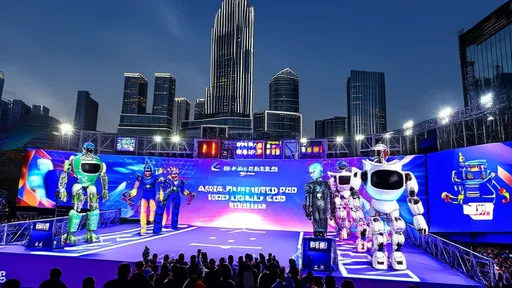
Humanoid robotics has entered a new era of competitive spectacle, and nowhere was this more evident than at the recent Qingdao International Invitational. The event, held against the backdrop of one of China's most dynamic port cities, was not merely a tournament; it was a vibrant showcase of how far this technology has leaped from laboratory prototypes to dynamic, agile machines capable of complex athletic maneuvers. The air in the competition halls crackled with a unique energy—a blend of tense human anticipation and the precise, whirring sounds of servos and actuators.
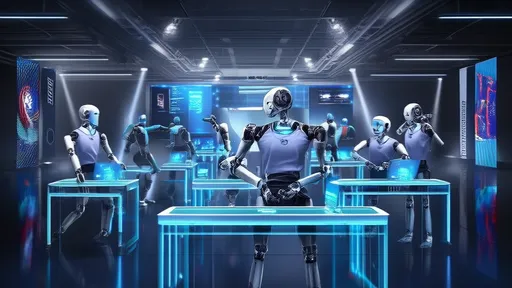
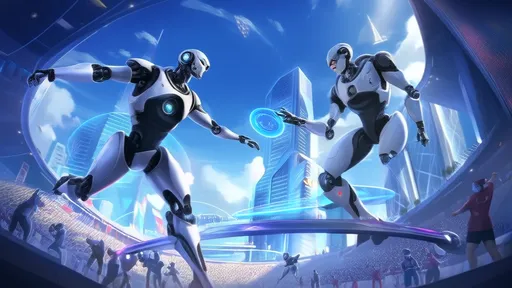
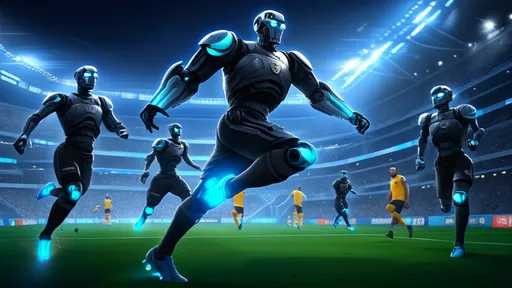
The core premise of these events is as fascinating as it is challenging: to build machines that can navigate and perform tasks in environments designed for humans. This year's Qingdao Invitational featured a suite of events that pushed these boundaries further than ever before. Robots were tasked with everything from sprinting and obstacle courses to more technically demanding challenges like climbing stairs, manipulating objects with dexterity, and even playing simplified versions of team sports. The sight of a humanoid robot maintaining its balance to kick a ball accurately, or swiftly navigating a path littered with unexpected barriers, drew gasps and applause from the captivated audience. It was a powerful demonstration of resilience, with many robots picking themselves up after a fall—a critical and symbolic step forward in autonomous recovery.
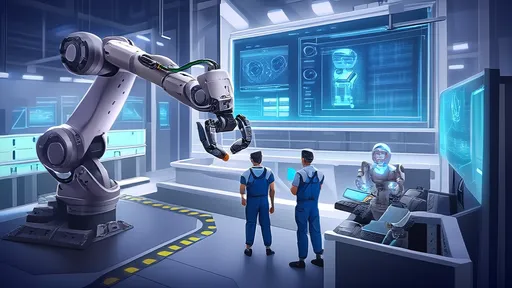
Behind the spectacle lies a monumental engineering challenge. Achieving this level of performance requires groundbreaking advancements across multiple disciplines. The most visible struggle is with dynamic balance and locomotion. Unlike industrial robots bolted to the factory floor, these humanoids must constantly adjust to uneven terrain and external forces, relying on a complex fusion of data from inertial measurement units, force sensors, and vision systems. The processors onboard must make split-second calculations to adjust joint torque and step placement, a task that consumes enormous computational power. The teams, a mix of university groups and private companies, each have their own philosophical approach to these problems, whether it's through advanced control algorithms, innovative mechanical designs like compliant actuators, or novel applications of machine learning trained in vast simulated environments.
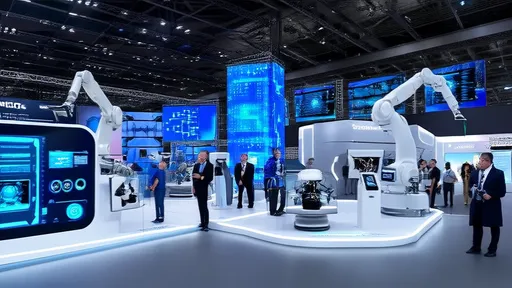
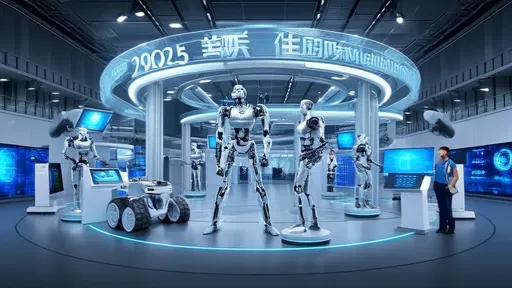
While the games are entertaining, their true significance extends far beyond the winner's podium. The technologies being stress-tested in these high-pressure scenarios have profound real-world implications. The advanced mobility and manipulation skills on display are directly transferable to search and rescue operations, where robots could one day traverse rubble and debris too dangerous for human first responders. In logistics and manufacturing, humanoids offer the potential to work seamlessly alongside people in unstructured settings, using the same tools and navigating the same spaces without requiring massive infrastructure changes. Furthermore, the event highlighted the rapid progress being made in China's robotics sector, showcasing homegrown innovation and fostering valuable collaboration between academia, industry, and government bodies aiming to solidify the country's position as a global leader in advanced technology.
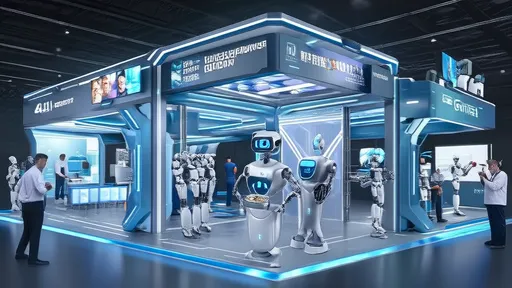
The Qingdao Invitational also served as a crucial cultural and collaborative nexus. It brought together some of the brightest minds in robotics from across the globe, creating a fertile ground for the exchange of ideas. In the pits and during technical sessions, engineers from competing teams could be seen discussing common challenges, sharing insights, and debating the merits of different design approaches. This spirit of open collaboration, even amidst competition, is a driving force behind the field's accelerated progress. For the public and aspiring engineers in attendance, the event was deeply inspirational, making cutting-edge technology accessible and demonstrating a thrilling, tangible future that was once confined to science fiction.
As the final matches concluded and the champions were crowned, the prevailing sentiment was one of excited anticipation for what comes next. The bar has been raised, and the performance benchmarks set in Qingdao will undoubtedly fuel the development cycles for teams worldwide. The iterative process of competition, failure, and improvement is rapidly closing the gap between human and robotic capabilities. These events are more than just games; they are the crucibles in which the future of practical, general-purpose humanoid robots is being forged. The world is watching, and the pace of innovation suggests that the day when these machines step out of the arena and into our daily lives is arriving sooner than many anticipated.

By /Aug 27, 2025

By /Aug 27, 2025

By /Aug 27, 2025

By /Aug 27, 2025
By /Sep 12, 2025

By /Aug 27, 2025
By /Sep 12, 2025

By /Aug 27, 2025

By /Aug 27, 2025
By /Sep 12, 2025
By /Sep 12, 2025
By /Sep 12, 2025

By /Aug 27, 2025
By /Sep 12, 2025
By /Sep 12, 2025
By /Sep 12, 2025

By /Aug 27, 2025
By /Sep 12, 2025
By /Sep 12, 2025

By /Aug 27, 2025