African Renewable Energy Project Secures International Syndicated Financing, Green Energy Investment Heats Up

Sep 16, 2025 By

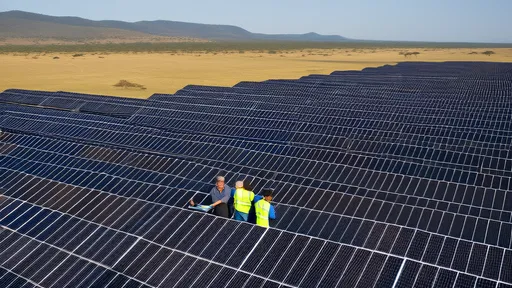
International banking consortiums are increasingly turning their attention to Africa's renewable energy sector, with a recent multimillion-dollar financing deal underscoring the growing confidence in the continent's green energy potential. The landmark transaction, which involves multiple European and African financial institutions, signals a pivotal shift in how global capital perceives energy investments in developing regions.


Behind closed doors in Nairobi and Zurich, negotiators spent months structuring a complex financing package that would satisfy both development mandates and commercial return expectations. The deal, which closed last week, represents one of the largest private investments in African renewable energy to date. Banking executives involved describe it as a template for future collaborations between international lenders and African project developers.


Market analysts observe that this transaction occurs against a backdrop of rapidly changing investment patterns. Whereas traditional energy projects dominated foreign direct investment in Africa just five years ago, renewable energy initiatives now account for nearly forty percent of all energy sector financing. This represents not merely a shift in preference but a fundamental revaluation of Africa's energy future.


The financing consortium includes institutions that previously had limited exposure to African energy markets. Their participation suggests that carefully structured renewable energy projects can meet the risk-return profiles demanded by conservative European banks. One managing director from a Swiss bank noted that the extensive due diligence process revealed better-than-expected regulatory frameworks and implementation capabilities in several African markets.


Technical consultants working on these projects emphasize that Africa's renewable potential remains largely untapped. Solar irradiation levels across the continent's sunbelt nations exceed those in most European countries, while wind patterns in coastal and highland regions offer consistent generation capacity. Geothermal resources in the East African Rift Valley represent another frontier for development, though these require more specialized expertise and higher initial investment.


Local developers have welcomed the increased interest from international financiers but caution that project success depends on more than just funding. Regulatory stability, grid infrastructure, and community engagement remain critical factors that determine whether projects deliver their promised returns. Several developers interviewed stressed that international lenders are becoming more sophisticated in their understanding of these local dynamics.


The growing pipeline of renewable energy projects across Africa reflects this maturation of the sector. From utility-scale solar farms in Namibia to wind projects in Kenya and hydropower in Ghana, the diversity of technologies and markets demonstrates how renewable energy is becoming mainstream rather than experimental. Project developers report that international lenders now evaluate proposals based on long-term energy forecasts rather than viewing them as purely developmental exercises.


Banking sources indicate that the due diligence process for these transactions has evolved significantly. Whereas previous assessments focused heavily on political risk insurance and sovereign guarantees, lenders now conduct detailed analysis of power purchase agreements, grid connectivity, and technical specifications. This shift reflects both growing confidence in African energy markets and increased expertise in evaluating renewable projects globally.


Environmental considerations continue to drive certain aspects of these investments, but bankers are quick to note that commercial viability remains paramount. The decreasing cost of renewable technology, particularly solar photovoltaics and wind turbines, has improved project economics substantially. In many cases, renewable energy now represents the lowest-cost option for new generation capacity, making these projects financially attractive independent of their environmental benefits.


Regional development banks have played a crucial role in bridging the gap between international commercial lenders and African project developers. By providing partial guarantees and technical assistance, these institutions have helped mitigate perceived risks and build confidence among private sector financiers. Their involvement has been particularly important in markets with less established track records for energy projects.


The current wave of investment differs from previous cycles in its emphasis on local capacity building. Financing agreements increasingly include provisions for technology transfer, local hiring, and community development programs. International consortia recognize that project sustainability depends not only on technical and financial factors but also on social acceptance and local economic benefits.


Looking ahead, banking analysts predict continued growth in renewable energy financing across Africa, though they note that challenges remain. Currency risks, regulatory changes, and grid limitations in some markets continue to concern international lenders. However, the successful closure of several high-profile transactions has created momentum that will likely carry through the next several years.


The transformation of Africa's energy landscape through these investments carries implications beyond the power sector. Reliable electricity access enables economic development across multiple industries, from manufacturing to technology services. International financiers increasingly view energy investments as foundational to broader economic growth rather than as isolated infrastructure projects.


As the sun sets over the solar farms now dotting landscapes from Morocco to South Africa, the symbolic importance of these developments matches their practical impact. They represent not just megawatts of clean energy but a fundamental shift in how the world views Africa's development pathway—one that bypasses conventional fossil fuel dependence and moves directly toward sustainable energy systems.


The banking professionals who structured these deals often speak of working at the intersection of profit and purpose. While returns must satisfy shareholders, many express genuine excitement about contributing to Africa's sustainable development. This dual motivation may explain why these complex transactions continue to attract top talent from the world's leading financial institutions.


As more projects reach financial close and begin operation, the evidence base for renewable investments in Africa continues to grow. Success stories attract additional capital, while lessons from challenges inform better project design. This virtuous cycle promises to accelerate Africa's energy transition while providing solid returns for international investors willing to navigate the complexities of emerging markets.


The convergence of environmental imperatives, improving economics, and developmental needs creates a powerful investment thesis that appears likely to sustain this trend for the foreseeable future. For international banking consortia, African renewable energy represents not just a niche opportunity but a strategic priority that aligns with both financial and sustainability goals.


Recommend Posts
Business

Brazil's Central Bank Keeps Interest Rate Unchanged, 19-Year High Constrains Economic Growth Dynamics

By /Sep 16, 2025

The Brazilian Central Bank's decision to maintain its benchmark interest rate at a staggering 19-year high has sent ripples through the nation's economic landscape, casting a long shadow over growth prospects and igniting fierce debate among policymakers, investors, and business leaders. With the Selic rate held firmly at 13.75%, the monetary authority continues its aggressive stance against inflation, prioritizing price stability even at the cost of stifling economic momentum. This prolonged period of restrictive monetary policy, while successful in taming price surges, now poses a significant threat to Brazil's fragile recovery, creating a complex and precarious balancing act for the country's economic stewards.
Business

SoftBank Vision Fund Adjusts Investment Strategy, AI and Robotics Remain Core Areas

By /Sep 16, 2025

SoftBank's Vision Fund, the world's largest technology-focused investment fund, is undergoing a strategic recalibration of its investment approach while reaffirming its commitment to artificial intelligence and robotics as core pillars of its portfolio. The shift comes amid a broader market reassessment of technology valuations and a more selective investment landscape.
Business

Vietnam Ends State Monopoly on Gold Bar Production, Precious Metals Market Faces New Competitive Landscape

By /Sep 15, 2025

Vietnam's recent decision to end the state monopoly on gold bar production marks a pivotal shift in the nation's precious metals market, signaling a new era of competition and potential transformation. For decades, the State Bank of Vietnam (SBV) held exclusive rights to produce gold bars, primarily through the Saigon Jewelry Company (SJC), which became the country's benchmark for gold trading. This move, part of broader economic reforms, is expected to liberalize the market, attract private investment, and align Vietnam more closely with global practices.
Business

South Korea's Zinc Industry Invests 140 Billion Won to Build a New Germanium Factory, Set to Begin Production in 2028

By /Sep 15, 2025

South Korea Zinc, the world's largest producer of zinc and lead, has announced a landmark investment of 140 billion won to construct a new germanium production facility, marking a significant strategic pivot into the high-purity metals sector. The ambitious project, slated for completion and operational launch by 2028, represents a calculated move to secure a domestic supply chain for a critical material increasingly central to modern technology and national security. This development is not merely an expansion of the company's portfolio but a direct response to the escalating global demand and geopolitical tensions surrounding key semiconductor and defense materials.
Business

China's Foreign Trade Resilience Supports Global Economic Uncertainty

By /Sep 15, 2025

China's foreign trade has once again demonstrated remarkable resilience in the face of global economic turbulence, providing a crucial anchor for stability amid widespread uncertainty. According to recent analysis by Business Today Malaysia, the sustained performance of China's export and import sectors continues to defy pessimistic forecasts, offering a buffer against the volatility that has characterized international markets in recent years. This resilience is not merely a short-term phenomenon but reflects deeper structural strengths within the world's second-largest economy.
Business

Service Trade Fair Showcases Latest Achievements in Telecommunications, Artificial Intelligence, Finance, and Other Fields

By /Sep 15, 2025

The recent China International Fair for Trade in Services (CIFTIS) held in Beijing has drawn significant international attention, with Myanmar's state-run New Light of Myanmar highlighting the event's focus on cutting-edge advancements in telecommunications, artificial intelligence, and financial services. The exhibition served as a global stage for innovators and industry leaders to present transformative technologies poised to reshape economic landscapes and international trade dynamics.
Business

Service Trade Fair Highlights China's Commitment to High-Level Opening-up, Simplifies Foreign Investment Access Rules

By /Sep 15, 2025

The recent China International Fair for Trade in Services (CIFTIS) has once again underscored Beijing's unwavering dedication to fostering a more open and accessible economic landscape. Against the backdrop of global economic uncertainties and rising protectionist tendencies, the event served as a powerful platform to reaffirm China's commitment to high-standard liberalization and its resolve to simplify foreign investment rules. The fair, which attracted participants from across the globe, highlighted not only the nation's growing prowess in the services sector but also its strategic intent to integrate more deeply with the world economy.
Business

Shanxi Cultural Tourism Project Signing Yields Impressive Outcomes, Cultural Expo Emerges as a Pivotal Platform for Industry Investment

By /Sep 15, 2025

Shanxi Province has emerged as a powerhouse in cultural tourism development, with recent project signings demonstrating remarkable success in attracting investment and fostering industry growth. The province's strategic focus on leveraging its rich cultural heritage has transformed traditional tourism into a dynamic economic driver, creating new opportunities for both domestic and international investors.
Business

Saudi Sovereign Wealth Fund Increases Investment in Asia-Pacific, Focusing on New Energy and Technology Sectors

By /Sep 16, 2025

In a strategic pivot that underscores the shifting dynamics of global capital flows, Saudi Arabia's Public Investment Fund (PIF) is significantly amplifying its investment footprint across the Asia-Pacific region. The sovereign wealth fund, with assets exceeding $700 billion, is channeling substantial capital into high-growth sectors, with a pronounced emphasis on renewable energy and cutting-edge technology. This move is not merely a portfolio diversification tactic but a calculated alignment with global macroeconomic trends and Saudi Arabia's own Vision 2030 blueprint, which aims to reduce the kingdom's economic dependence on hydrocarbons.
Business

China's Exports to EU, ASEAN, and Africa Show Strong Performance

By /Sep 15, 2025

China's export performance to key global markets has demonstrated remarkable resilience and strategic growth, particularly in its trade relationships with the European Union, ASEAN, and Africa. According to recent reports, including coverage by the New York Post, Chinese exports to these regions have surged, defying broader global economic headwinds and reinforcing China's pivotal role in international supply chains. This trend is not merely a short-term fluctuation but appears to be part of a deeper, more sustained economic strategy.
Business

Russia Extends Gasoline Export Restrictions to September 30, Adding Uncertainty to Global Energy Markets

By /Sep 15, 2025

Russia has extended its ban on gasoline exports until September 30, a move that is set to inject further volatility into global energy markets already grappling with supply uncertainties and shifting geopolitical dynamics. The decision, confirmed by the Russian government earlier this week, comes as part of ongoing efforts to stabilize domestic fuel prices and ensure sufficient supply for the local market amid persistent logistical challenges and seasonal demand pressures.
Business

Laotian Times Focuses on the Transformation of the Trade in Services Fair: From Service Outsourcing to Digital and Green Solutions

By /Sep 15, 2025

In the bustling halls of the China International Fair for Trade in Services (CIFTIS), a quiet revolution is unfolding. What began as a platform primarily focused on service outsourcing has dramatically transformed, now championing the dual pillars of digital innovation and green solutions. This evolution, keenly observed by publications like the Laos Times, reflects a broader global shift towards sustainable and technologically advanced economic practices.
Business

North China Cultural Tourism Brand Index Grows by 17.1% Month-on-Month, International Exhibitions Show Significant Effects

By /Sep 15, 2025

The cultural and tourism landscape of North China has witnessed a remarkable surge, with the latest brand index reflecting a robust 17.1% quarter-on-quarter growth. This upward trajectory is largely attributed to the strategic hosting of high-profile international exhibitions, which have not only amplified regional visibility but also stimulated multidimensional economic and cultural exchanges. The convergence of global attention and local initiatives has created a fertile ground for sustainable development in the sector.
Business

China Cultural Tourism Group's Financing Activities Thrive, Short-term Commercial Papers and Private Bonds Support Project Expansion

By /Sep 16, 2025

China's cultural tourism sector is witnessing a remarkable financial momentum as China Cultural Tourism Group intensifies its funding activities to bolster ambitious expansion plans. The group has been actively leveraging short-term financing instruments and private placement bonds to secure necessary capital, signaling both market confidence and strategic foresight in a rapidly evolving industry landscape.
Business

African Renewable Energy Project Secures International Syndicated Financing, Green Energy Investment Heats Up

By /Sep 16, 2025

International banking consortiums are increasingly turning their attention to Africa's renewable energy sector, with a recent multimillion-dollar financing deal underscoring the growing confidence in the continent's green energy potential. The landmark transaction, which involves multiple European and African financial institutions, signals a pivotal shift in how global capital perceives energy investments in developing regions.
Business

U.S. Government Strategically Invests in Intel, Intensifying Nationalization Trend in the Semiconductor Industry

By /Sep 16, 2025

The United States government's strategic investment in Intel Corporation marks a significant escalation in the ongoing effort to reassert national control over critical semiconductor supply chains. This move, part of a broader pattern of industrial policy shifts, underscores a deepening recognition of chips as foundational to both economic competitiveness and national security. The Biden administration’s decision to directly support Intel—a historic American champion in the sector—is not merely a financial injection; it is a potent symbol of a larger, global trend where nations are aggressively pulling semiconductor production back within their borders, a phenomenon increasingly termed as the "nationalization" of the chip industry.
Business

India Plans to Reduce Russian Oil Purchases, US Tariff Policies Affect Global Energy Trade Flows

By /Sep 16, 2025

India is reportedly planning to reduce its crude oil purchases from Russia, a move that could significantly reshape global energy trade flows amid ongoing geopolitical tensions and shifting economic policies. This development comes as the United States intensifies its tariff strategies, creating ripple effects across international markets and forcing nations to reconsider their energy procurement strategies.
Business

Blackstone Group Optimistic on China's Logistics Real Estate, Initiates New Round of Investment Layout

By /Sep 16, 2025

Global investment giant Blackstone has initiated a new wave of strategic investments in China's logistics real estate sector, signaling robust confidence in the long-term growth trajectory of the country's supply chain infrastructure. The move comes amid accelerating e-commerce penetration, manufacturing upgrades, and sustained domestic consumption growth, all of which continue to drive demand for modern logistics facilities.
Business

Three Gorges Cultural Tourism Group and Others Advance Diversified Financing Tools, Raising Over 13 Billion Yuan

By /Sep 16, 2025

China Three Gorges Cultural Tourism Group, along with its strategic partners, has successfully secured over 13 billion yuan in diversified financing, marking a significant milestone in the development of the region's tourism infrastructure and services. This substantial financial injection is set to accelerate a series of high-profile projects aimed at enhancing visitor experiences and promoting sustainable tourism.
Business

Australian Lithium Miner Signs Long-Term Supply Agreement with South Korean Battery Manufacturer to Ensure Raw Material Stability

By /Sep 16, 2025

In a significant move that underscores the deepening ties between resource-rich Australia and technology-driven South Korea, a major lithium mining company from Down Under has inked a long-term supply agreement with a leading South Korean battery manufacturer. The deal, finalized earlier this week, is being hailed by industry analysts as a strategic masterstroke that ensures a steady and reliable stream of critical raw materials for the burgeoning electric vehicle (EV) and energy storage sectors.