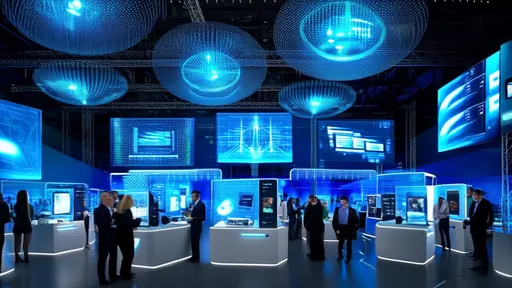
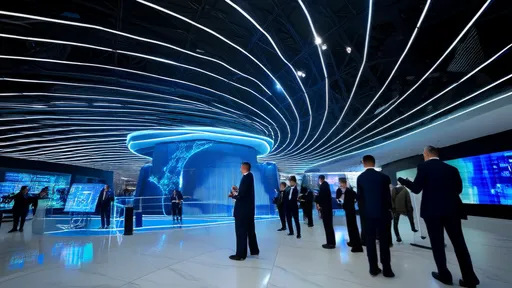
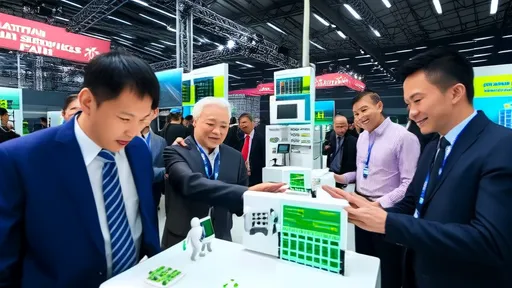
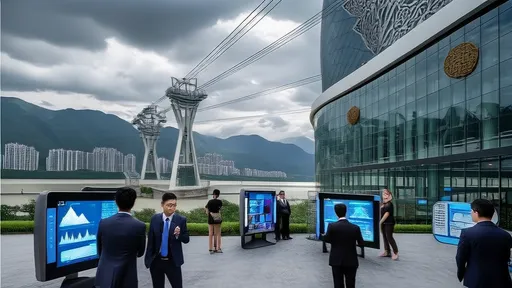
The recent China International Fair for Trade in Services (CIFTIS) held in Beijing has drawn significant international attention, with Myanmar's state-run New Light of Myanmar highlighting the event's focus on cutting-edge advancements in telecommunications, artificial intelligence, and financial services. The exhibition served as a global stage for innovators and industry leaders to present transformative technologies poised to reshape economic landscapes and international trade dynamics.
In the telecommunications sector, major players showcased next-generation infrastructure and solutions designed to enhance global connectivity. 5G integration and beyond was a central theme, with demonstrations highlighting ultra-low latency applications, IoT ecosystems, and smart city frameworks. These innovations are not merely incremental improvements but represent foundational shifts in how data is transmitted and utilized across industries, promising to bridge digital divides and foster more inclusive economic participation worldwide.
Artificial intelligence emerged as another cornerstone of the exhibition, with applications spanning from predictive analytics to autonomous systems. Exhibitors presented AI-driven tools capable of optimizing supply chains, personalizing customer experiences, and advancing healthcare diagnostics. The emphasis was on practical, scalable AI that integrates seamlessly into existing business and social infrastructures, underscoring a move towards intelligent automation as a service rather than a standalone product.
The financial technology segment revealed breakthroughs in blockchain, digital currencies, and secure transaction protocols. Institutions and fintech startups alike demonstrated platforms that enhance transparency, reduce fraud, and streamline cross-border payments. These developments are particularly significant for emerging economies, offering new avenues for financial inclusion and stability by leveraging technology to create more resilient and accessible economic systems.
Beyond individual technological displays, the event underscored the growing interdependence between these sectors. Convergences between AI and telecom were evident in network optimization algorithms, while fintech applications increasingly rely on both secure telecommunications frameworks and AI for risk assessment and fraud detection. This synergy suggests a future where technological progress is holistic, with advancements in one domain catalyzing growth in others.
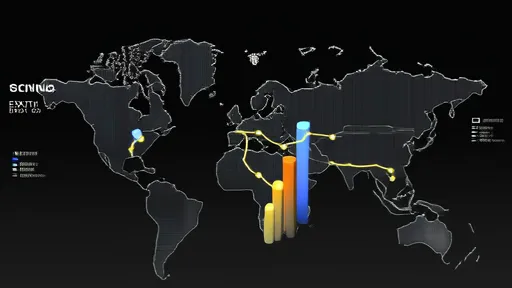
The reporting by New Light of Myanmar also touched upon the geopolitical and economic implications of these technologies. As nations vie for leadership in critical tech arenas, events like CIFTIS become not only trade fairs but also forums for diplomatic and economic dialogue. The participation of multiple countries indicates a recognition that collaboration, even amidst competition, is essential for harnessing technology's full potential and addressing shared global challenges.
From an economic perspective, the showcased technologies are expected to drive significant productivity gains and create new market opportunities. However, they also raise important questions about regulation, ethics, and the future of work. The exhibition included several panel discussions and forums addressing these very issues, reflecting a broader understanding that technological advancement must be paired with thoughtful governance and inclusive policies.
In summary, the CIFTIS event, as covered by New Light of Myanmar, provided a comprehensive overview of the current state and future trajectory of key service sectors. The advancements in telecom, AI, and finance illustrated a world rapidly moving towards greater connectivity, intelligence, and efficiency. While the potential benefits are immense, the event also highlighted the complexities and responsibilities that come with such transformative power, setting the stage for ongoing international discourse and development in the years to come.
By /Sep 16, 2025
By /Sep 16, 2025

By /Sep 15, 2025
By /Sep 15, 2025
By /Sep 15, 2025
By /Sep 15, 2025
By /Sep 15, 2025

By /Sep 15, 2025

By /Sep 16, 2025
By /Sep 15, 2025

By /Sep 15, 2025
By /Sep 15, 2025
By /Sep 15, 2025

By /Sep 16, 2025
By /Sep 16, 2025

By /Sep 16, 2025
By /Sep 16, 2025
By /Sep 16, 2025
By /Sep 16, 2025

By /Sep 16, 2025