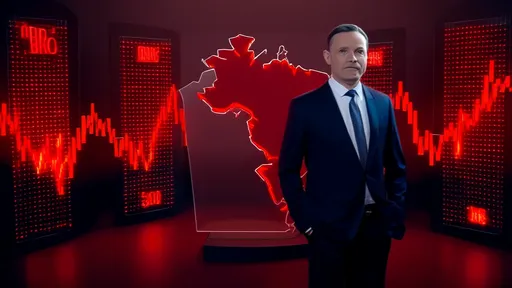
The Brazilian Central Bank's decision to maintain its benchmark interest rate at a staggering 19-year high has sent ripples through the nation's economic landscape, casting a long shadow over growth prospects and igniting fierce debate among policymakers, investors, and business leaders. With the Selic rate held firmly at 13.75%, the monetary authority continues its aggressive stance against inflation, prioritizing price stability even at the cost of stifling economic momentum. This prolonged period of restrictive monetary policy, while successful in taming price surges, now poses a significant threat to Brazil's fragile recovery, creating a complex and precarious balancing act for the country's economic stewards.
The backdrop to this decision is a global environment of heightened uncertainty, marked by volatile commodity prices, shifting geopolitical dynamics, and divergent monetary policies among major economies. Brazil, as a major emerging market, finds itself particularly vulnerable to these external shocks. The Central Bank's unwavering commitment to its inflation targets reflects a deep-seated concern over anchoring expectations and preventing a resurgence of the price instability that has plagued the nation in the past. However, the collateral damage of this approach is becoming increasingly evident across various sectors of the economy.
Corporate investment has been among the first casualties of the high-interest rate environment. Businesses, facing exorbitant borrowing costs, are shelving expansion plans and delaying capital expenditures. The manufacturing sector, in particular, is feeling the pinch as credit becomes prohibitively expensive, hampering productivity improvements and technological upgrades. Small and medium-sized enterprises, which form the backbone of Brazil's job market, are struggling to access affordable financing, leading to a contraction in operational capacity and, in some cases, outright closures.
The real estate market, traditionally a key driver of economic activity, has entered a pronounced slowdown. Mortgage rates have soared, pricing out many potential homebuyers and causing a sharp decline in housing starts and construction activity. This downturn has a multiplier effect, impacting everything from building materials suppliers to furniture retailers, and contributing to rising unemployment in the construction sector. The dampening effect on wealth creation and consumer confidence is substantial, further constraining domestic demand.
Consumer spending, which accounts for a significant portion of Brazil's GDP, is under severe pressure. High interest rates have dramatically increased the cost of credit for households, affecting everything from auto loans to credit card purchases. With disposable income squeezed by persistent inflation and borrowing costs, families are cutting back on discretionary spending, dealing a blow to the retail and services sectors. This retrenchment in consumption is creating a vicious cycle, where reduced demand leads to lower production, which in turn affects employment and income levels.
The agricultural sector, often a bright spot in the Brazilian economy, is not immune to these challenges. While commodity exports remain relatively strong, domestic agricultural investment is being curtailed by high financing costs. Farmers are finding it increasingly difficult to secure loans for equipment upgrades, land expansion, and technological adoption, potentially compromising the sector's long-term competitiveness and productivity growth.
On the fiscal front, the high interest rate environment is placing enormous strain on public finances. Servicing the government's growing debt burden has become increasingly costly, consuming a larger share of federal revenues and limiting the state's ability to invest in critical infrastructure, education, and social programs. This fiscal constraint comes at a particularly inopportune time, as Brazil faces pressing needs for public investment to address structural bottlenecks and social inequalities.
Despite these growing headwinds, the Central Bank remains resolute in its position, pointing to still-elevated inflation readings and the need to ensure that price increases are firmly on a downward trajectory towards the target. Governor Campos Neto and his team have emphasized the importance of maintaining credibility and avoiding premature easing that could undermine the progress made thus far. They argue that a solid foundation of price stability is a prerequisite for sustainable long-term growth, even if it requires short-term pain.
However, critics contend that the Bank is being overly cautious, risking excessive damage to the real economy. They point to leading indicators showing weakening activity, rising unemployment, and diminishing inflationary pressures beyond the volatile food and energy components. Some economists argue for a more nuanced approach that begins a gradual easing cycle, suggesting that the lagged effects of monetary policy mean that the full impact of previous hikes has yet to be felt.
The political dimension adds another layer of complexity to this economic dilemma. The Lula administration has been increasingly vocal in its criticism of the Central Bank's stance, arguing that the high rates are unnecessarily choking growth and exacerbating social problems. This tension between the elected government and the technically independent Central Bank creates uncertainty about the future direction of monetary policy and could potentially undermine the institution's credibility if perceived as bowing to political pressure.
International investors are watching these developments closely, weighing the commitment to price stability against the growth outlook. While high interest rates offer attractive yields for fixed-income investments, they also raise concerns about the country's ability to service its debt and generate sustainable economic expansion. The strong currency, bolstered by high rates, helps contain imported inflation but also hurts export competitiveness, creating another trade-off for policymakers to navigate.
Looking ahead, the path for Brazilian monetary policy remains fraught with challenges. The Central Bank faces the unenviable task of determining the precise moment when the fight against inflation has been sufficiently won to allow for policy normalization. A misstep in either direction—waiting too long to cut rates or moving too early—could have significant consequences for economic stability and growth.
Most analysts expect the tightening cycle to have peaked, with rate cuts likely beginning in the coming months. However, the pace and magnitude of any easing are subject to considerable debate. The Bank will need to carefully monitor a range of indicators, from core inflation measures to labor market dynamics and inflation expectations, to guide its decisions. The ultimate goal remains a soft landing that preserves the gains on inflation while fostering a return to robust and inclusive economic growth.
For now, Brazil remains caught in the grip of high interest rates, with businesses and households bearing the cost of price stability. The resolution of this tension will shape the country's economic trajectory for years to come, testing the mettle of its institutions and the patience of its people. As the global economic landscape continues to evolve, Brazil's policymakers must steer a careful course between the rock of inflation and the hard place of stagnation, seeking that elusive equilibrium that delivers both stability and prosperity.
By /Sep 16, 2025

By /Sep 16, 2025

By /Sep 15, 2025

By /Sep 15, 2025
By /Sep 15, 2025

By /Sep 15, 2025

By /Sep 15, 2025

By /Sep 15, 2025

By /Sep 16, 2025
By /Sep 15, 2025

By /Sep 15, 2025

By /Sep 15, 2025

By /Sep 15, 2025

By /Sep 16, 2025
By /Sep 16, 2025

By /Sep 16, 2025
By /Sep 16, 2025

By /Sep 16, 2025

By /Sep 16, 2025
By /Sep 16, 2025