India is reportedly planning to reduce its crude oil purchases from Russia, a move that could significantly reshape global energy trade flows amid ongoing geopolitical tensions and shifting economic policies. This development comes as the United States intensifies its tariff strategies, creating ripple effects across international markets and forcing nations to reconsider their energy procurement strategies.
For years, Russia has been a crucial supplier of crude oil to India, offering discounted barrels that helped the South Asian nation meet its growing energy demands cost-effectively. However, recent developments suggest that New Delhi is preparing to scale back these imports, potentially altering a trade relationship that has flourished since Western nations began imposing sanctions on Moscow. The shift appears driven by multiple factors, including diplomatic pressure, logistical challenges, and changing economic calculations.
The United States' increasingly aggressive tariff policies have created additional complications for global energy traders. Washington's approach to trade has evolved into a weaponized economic tool, affecting not just bilateral relations but entire supply chains. These tariffs have made certain energy shipments more expensive and complicated, forcing market participants to seek alternative routes and suppliers while navigating an increasingly fragmented global trading system.
Market analysts observe that India's potential pullback from Russian crude represents more than just a bilateral adjustment. It signals a broader realignment in global energy patterns that could benefit Middle Eastern producers while potentially creating new opportunities for American energy exports. Saudi Arabia and Iraq, in particular, stand to gain market share as Indian refiners potentially return to traditional suppliers.
The timing of India's contemplated shift coincides with strengthening diplomatic ties between New Delhi and Washington. While Indian officials maintain that energy purchases remain a commercial decision, the geopolitical dimension cannot be ignored. The United States has consistently urged allies and partners to reduce financial flows to Russia, and India's recalibration could be viewed as responding to these diplomatic overtures while maintaining its strategic autonomy.
Shipping and insurance complications have also made Russian crude less attractive than during the initial months following Moscow's invasion of Ukraine. Early discounts of $30-35 per barrel have narrowed considerably, currently standing at approximately $3-5 per barrel compared to global benchmarks. This narrowing discount, combined with higher transportation costs and payment complications, has diminished the economic advantage that once made Russian crude irresistible to Indian refiners.
Meanwhile, American tariff policies continue creating uncertainty in global energy markets. The Biden administration's approach combines traditional protectionism with climate objectives, resulting in complex trade measures that affect energy products differently based on their environmental footprint. This has particularly impacted heavy crude imports while creating advantages for certain US energy exports.
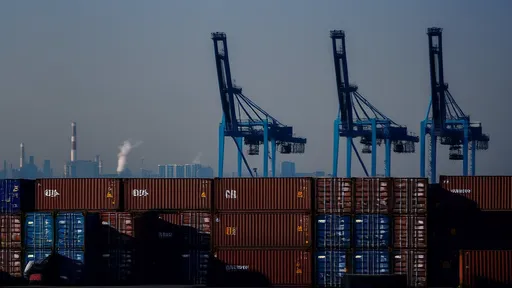
The potential reduction in Indian purchases of Russian crude already affects global tanker flows and freight rates. The shipping industry had adapted to longer-haul routes from Russian ports to Indian refineries, but a shift back to Middle Eastern suppliers would mean shorter voyages and different vessel requirements. This rebalancing could ease some pressure on global tanker capacity while altering regional shipping patterns.
Financial institutions and payment mechanisms represent another challenging aspect of the evolving situation. India and Russia developed alternative payment arrangements to circumvent Western financial sanctions, but these systems have proven cumbersome and limited in scale. The complexity of settling large energy transactions without using the US dollar or European financial channels has increasingly made Russian crude less convenient despite its competitive pricing.
Looking forward, energy analysts suggest that global trade patterns may continue fragmenting into regional blocs with distinct pricing mechanisms and trading relationships. The United States' willingness to use tariff policies as strategic tools accelerates this fragmentation, potentially creating a less efficient global market with wider price disparities between regions.
For India, the calculus involves balancing economic interests with strategic relationships. While cost remains paramount for a price-sensitive market serving millions of energy consumers, the nation's broader diplomatic and economic objectives also influence procurement decisions. The emerging pattern suggests India will diversify rather than completely abandon Russian energy, maintaining some level of engagement while increasing purchases from other regions.
The United States appears to be achieving multiple objectives through its tariff policies: protecting domestic energy producers, advancing climate goals, and applying economic pressure on geopolitical rivals. However, these policies also risk reducing American influence in some markets as trading partners develop alternative relationships and payment systems that exclude dollar-based transactions.
As the situation evolves, market participants are watching for signs of how deeply and quickly India might reduce Russian crude imports. Some analysts suggest the shift will be gradual rather than abrupt, allowing markets to adjust without causing significant price disruptions. However, even a modest reduction could have meaningful implications for global trade flows and geopolitical relationships.
The interplay between India's energy decisions and US tariff policies highlights how economic and strategic considerations are increasingly intertwined in global energy markets. Nations must navigate complex trade-offs between cost, reliability, and diplomatic relationships when making energy procurement decisions—a challenge that will only intensify as geopolitical tensions persist and climate policies reshape energy systems.
This evolving situation demonstrates that energy security considerations now extend beyond simple supply and demand calculations to encompass financial mechanisms, shipping logistics, insurance arrangements, and geopolitical alignments. The coming months will reveal how successfully India and other nations can balance these competing priorities while maintaining stable energy supplies for their economies.
By /Sep 16, 2025

By /Sep 16, 2025

By /Sep 15, 2025

By /Sep 15, 2025
By /Sep 15, 2025

By /Sep 15, 2025

By /Sep 15, 2025

By /Sep 15, 2025

By /Sep 16, 2025
By /Sep 15, 2025

By /Sep 15, 2025

By /Sep 15, 2025

By /Sep 15, 2025

By /Sep 16, 2025

By /Sep 16, 2025

By /Sep 16, 2025

By /Sep 16, 2025

By /Sep 16, 2025

By /Sep 16, 2025

By /Sep 16, 2025