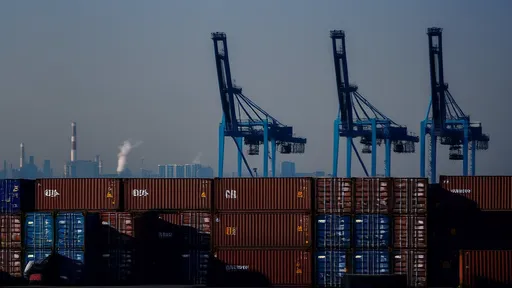
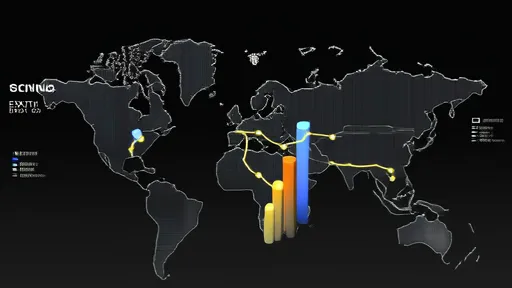
China's export performance to key global markets has demonstrated remarkable resilience and strategic growth, particularly in its trade relationships with the European Union, ASEAN, and Africa. According to recent reports, including coverage by the New York Post, Chinese exports to these regions have surged, defying broader global economic headwinds and reinforcing China's pivotal role in international supply chains. This trend is not merely a short-term fluctuation but appears to be part of a deeper, more sustained economic strategy.
The European Union, as one of China's largest trading partners, has seen a significant uptick in imports from the Asian giant. Despite geopolitical tensions and a push for strategic autonomy within the EU, demand for Chinese goods—ranging from electronics and machinery to consumer products—remains robust. European businesses continue to rely on China for cost-effective manufacturing and a diverse array of products, which has helped buffer some of the inflationary pressures felt across the continent. This interdependence, while complex, underscores the difficulty of decoupling from the world's manufacturing hub.
Similarly, trade with ASEAN nations has flourished, bolstered by regional comprehensive economic partnerships and China's deepening influence in Southeast Asia. The ASEAN bloc has become a critical node in China's broader trade network, facilitating not only the flow of goods but also investments and infrastructure projects under initiatives like the Belt and Road. Chinese exports to ASEAN have grown dynamically, covering sectors from technology and industrial equipment to textiles and agricultural products. This synergy has enhanced economic integration and positioned China as an indispensable partner for the region's development.
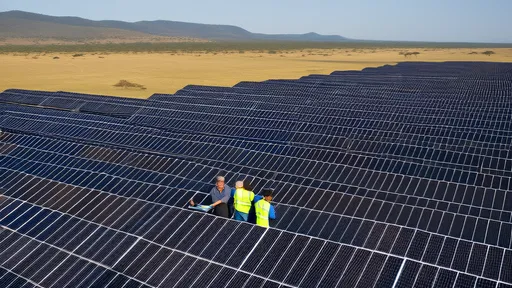
In Africa, China's export growth tells a story of expanding influence and mutually beneficial trade relationships. African nations have increasingly turned to China for affordable goods, machinery, and technology that support local industries and infrastructure development. Unlike traditional Western partners, China offers competitive pricing and fewer political strings attached, making its exports particularly attractive to emerging economies. This has allowed Chinese businesses to penetrate deep into African markets, fostering long-term economic ties that go beyond mere transactional trade.
Several factors underpin this strong export performance. China's manufacturing prowess, economies of scale, and efficient logistics networks enable it to deliver goods reliably and at competitive prices. Moreover, the country's ability to pivot and adapt to global demand shifts—such as increased need for medical supplies during the pandemic or tech products amid digital transformation—has kept its exports relevant and in high demand. Trade policies and diplomatic efforts have also played a role, with China actively forging agreements that reduce tariffs and streamline cross-border commerce.
However, this success does not come without challenges. Rising production costs, environmental concerns, and international scrutiny over trade practices pose potential risks to sustained growth. Additionally, as regions like the EU and ASEAN seek to diversify their supply chains and enhance local production capabilities, China may face stiffer competition. Yet, for now, the momentum appears strong, and Chinese exports continue to play a crucial role in the economic stability of both China and its partners.
Looking ahead, the trajectory of China's exports will likely be shaped by how it navigates these complexities while continuing to innovate and integrate into the global economy. The ongoing shifts in global trade dynamics, coupled with domestic policies aimed at high-quality development, will determine whether this robust export performance can be maintained in the long run. For now, the numbers speak for themselves: China's trade with the EU, ASEAN, and Africa is not just surviving; it's thriving.

By /Sep 16, 2025

By /Sep 16, 2025

By /Sep 15, 2025

By /Sep 15, 2025
By /Sep 15, 2025

By /Sep 15, 2025

By /Sep 15, 2025

By /Sep 15, 2025

By /Sep 16, 2025
By /Sep 15, 2025

By /Sep 15, 2025

By /Sep 15, 2025

By /Sep 15, 2025

By /Sep 16, 2025
By /Sep 16, 2025

By /Sep 16, 2025
By /Sep 16, 2025
By /Sep 16, 2025

By /Sep 16, 2025

By /Sep 16, 2025